
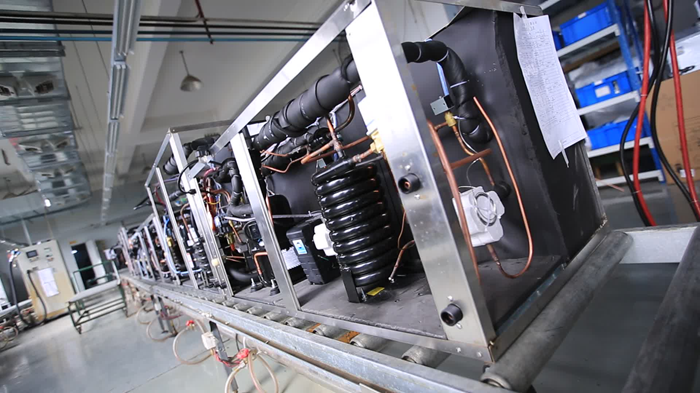
Proper installation of commercial refrigeration equipment determines not only the quality of product storage but also energy consumption, noise levels, component lifespan, and temperature stability. Start-up errors often lead to refrigerant leaks, compressor overheating, evaporator icing, and premature failure.
Below are practical installation guidelines: from site preparation to commissioning and regular inspections. These recommendations are suitable for display cases, cabinets, chest freezers, chambers, and remote systems, including commercial cold storage solutions.
Site Preparation and Design
Before installation, assess the operating conditions: product type, required temperature, humidity, door opening patterns, and peak loads. For equipment with remote cooling, determine the routes, lengths of the lines, and locations for installing the outdoor units in advance.
Room Requirements
- Ventilation and Heat Dissipation: The condenser requires free airflow; there should be no heat sources nearby (stoves, radiators, or direct sunlight).
- Ambient Temperature: Observe the range specified by the manufacturer, otherwise the system will wear out.
- Humidity and Dust: High humidity increases the risk of corrosion, while dust clogs heat exchangers and impairs cooling.
- Maintenance Access: Provide access for cleaning the condenser, access to the compressor, control panel, and drainage.
Foundation and Placement
Place the equipment on a level, solid, and level foundation. Uneven installation causes vibration, increased noise, improper condensate drainage, and accelerated compressor wear. In chambers and cabinets, proper door sealing and frame alignment are especially important.
Site Selection: Ventilation, Clearance, and Service Access Requirements
Correctly selecting a location for commercial refrigeration equipment directly impacts temperature stability, energy consumption, and compressor lifespan. Mistakes at this stage most often lead to overheating, frequent shutdowns, freezing, and accelerated component wear.
When selecting a location, consider the manufacturer’s specifications and the actual room conditions: air circulation, heat sources, traffic, access to utilities, and safe maintenance. The easier the equipment «breathes» and the more easily accessible it is, the less downtime and service costs.
Key Requirements
- Ventilation and Heat Dissipation: Do not block grilles or warm air exhaust areas; Ensure free circulation around the condenser. In cramped niches and closed boxes without forced ventilation, cooling efficiency drops sharply.
- Clearances from walls and objects: Observe the clearances specified in the instructions. If exact data is not available, allow extra clearance around the perimeter and at the top to ensure unimpeded heat dissipation and allow room for cleaning.
- Avoid heat sources: Do not place the equipment near stoves, ovens, hot display cases, radiators, in direct sunlight, or in areas subject to drafts from hot air.
- Service access: Allow safe access to the compressor compartment, condenser, drain, panel/terminal block, filters, and control units; provide space for opening doors/covers and sliding out modules.
- Room conditions: Choose a level surface, consider humidity and dust levels; If dust levels are high, plan for more frequent condenser cleaning and ensure easy access.
- Check the maintenance route: is it possible to access it with tools, remove panels, and pull out the unit without disassembling furniture or blocking access.
- Evaluate the supply/exhaust ventilation: is there natural ventilation or will forced ventilation be required (especially for built-in solutions and small utility rooms).
- Separate heat and cold: Keep equipment away from hot areas and areas with direct sunlight.
- Agree clearances: refer to the data sheet; Not too close, even if space is limited.
- Allow for operational safety: space for cleaning the condenser, draining condensate, and replacing seals and sensors must be accessible without shutting down adjacent equipment.
Bottom line: the optimal location is where the equipment provides free heat exchange, the required clearances, and easy access to components for regular cleaning and repair. Adhering to these conditions reduces the risk of overheating and breakdowns, stabilizes the temperature, and reduces maintenance costs.