
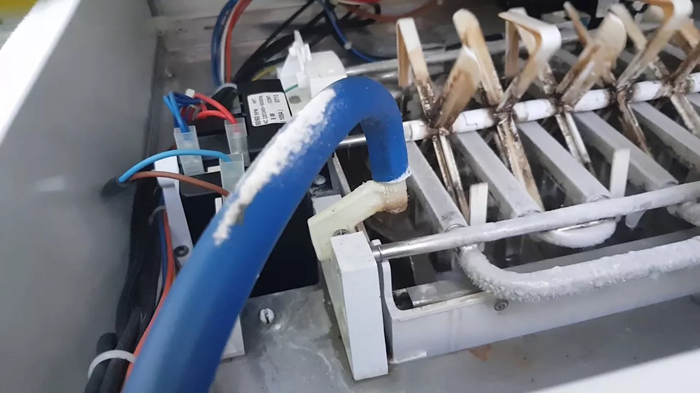
An ice machine is a key component of any kitchen, bar, or production area, where consistent ice production, sanitary safety, and predictable costs are essential. Ice machine repair requires precise diagnostics of the causes of failures (insufficient cooling, water supply issues, scale buildup, component wear, electronic errors) and adherence to the manufacturer’s maintenance requirements to prevent recurring failures and loss of ice quality.
The work involves checking the refrigeration circuit, water treatment system, sensors, electrical components, and mechanics, as well as mandatory cleaning and disinfection of internal surfaces that come into contact with water and ice. Properly performed ice machine repair ensures safe operation, extends the life of the equipment, and helps avoid downtime, especially during peak load periods.
Safety Standards for Ice Machine Maintenance
When servicing ice machines, safety comes down to three key areas: sanitation of contact surfaces and the water circuit, electrical safety of power and control units, and proper operation of the refrigerant and sealed circuit. Failures in any of these areas can lead to health risks for the ice user, injury to personnel, or equipment failure.
Before starting work, disconnect the unit from the power supply, shut off the water, ensure access to the technical data (refrigerant type, circuit diagram, service ports), and prepare PPE and a container for possible water/ice collection. During maintenance, it’s important to record the operations performed: what exactly was cleaned, which components were opened, what measurements were taken, and what consumables were used.
Sanitation, Electrical, and Refrigerant
Sanitation begins with eliminating cross-contamination: cleaning equipment should not be used «just anywhere,» and contact areas (hopper, evaporator/mold, paddles, guides, water tray, water hoses, and filters) should be treated only with products approved for food equipment. After cleaning, thorough rinsing and removal of chemical residues are essential, as even small traces of chemicals can damage the ice and cause complaints. Special attention is paid to biofilm and scale: visible cleanliness does not equate to sanitary safety, so disassembly and treatment of water system components are performed according to the manufacturer’s regulations. Electrical safety requires operation only with the power removed and the prevention of unintentional startup. During live diagnostics, only necessary measurements are permitted, performed by a trained specialist with serviceable measuring equipment and maintaining a safe distance from live parts. Grounding integrity, the condition of terminals and contactors, the absence of signs of overheating, moisture, and oxidation in terminal boxes, the correct wiring, and the quality of insulation are checked. After servicing, it is important to restore all protective covers and screens, and ensure that drainage and water lines do not pose a risk of water ingress into electrical components.
Critical Requirements and Post-Maintenance Checks
After completing the work, perform a test run and check: absence of leaks, proper water drainage, normal operation of fans and compressor, absence of foreign odors and contaminants in the bin, and a stable freezing/ice dumping cycle. If sanitization was performed, the first ice cycle is usually considered a control and, if necessary, disposed of in accordance with the facility’s internal regulations to prevent ice containing any cleaning agent residue from being recycled.
- Sanitary inspection: cleanliness of the bin and contact parts, absence of slime deposits, proper filter and hose functionality, correct dosing, and complete rinsing.
- Electrical inspection: restored lids, absence of drips/condensation on electrical components, secure terminals, proper grounding and protective devices.
- Refrigeration inspection: no signs of leaks, normal operating parameters, no abnormal freezing, tight connections after any manipulation.